Proforma invoice vs commercial invoice vs packing list: formats and an Excel template

Your first export order is confirmed, and the buyer's bank wants a proforma invoice today. The forwarder wants a packing list by Friday, and customs will want a commercial invoice when the goods move.
Your first export order is confirmed, and the buyer's bank wants a proforma invoice today. The forwarder wants a packing list by Friday, and customs will want a commercial invoice when the goods move. All three describe the same shipment, but they get typed at different times, often by different people. Then the packing list says 20 cartons, the invoice says 21, and the shipment sits at the port while someone works out which one is right.
The three documents do different jobs. A proforma invoice is a quotation sent before the sale is final. A commercial invoice is the bill of sale issued at shipment, and customs uses it to value the goods. A packing list shows what is physically in each package, without prices. This guide explains what belongs on each one, works through a real shipment and shows how to keep the paperwork consistent, whether you use a proforma invoice template in Excel or build your own.
Proforma invoice vs commercial invoice vs packing list
Here is the short comparison.
Proforma invoice
- When: before the sale is final, usually before the goods are made or shipped.
- Purpose: gives the buyer a firm offer so they can approve the purchase, arrange payment, open a letter of credit or apply for an import permit.
- Status: a quotation, not a demand for payment. It is not booked in your sales ledger.
Commercial invoice
- When: at shipment.
- Purpose: the legal bill of sale between you and the buyer. Customs uses it to value the goods and work out duty.
- Status: a real invoice. It is booked as a sale.
Packing list
- When: at shipment, alongside the commercial invoice.
- Purpose: tells the forwarder, carrier, customs and the receiver what is in each package and how much it weighs.
- Status: a logistics document. It shows no prices.
Proforma invoice format: what to include
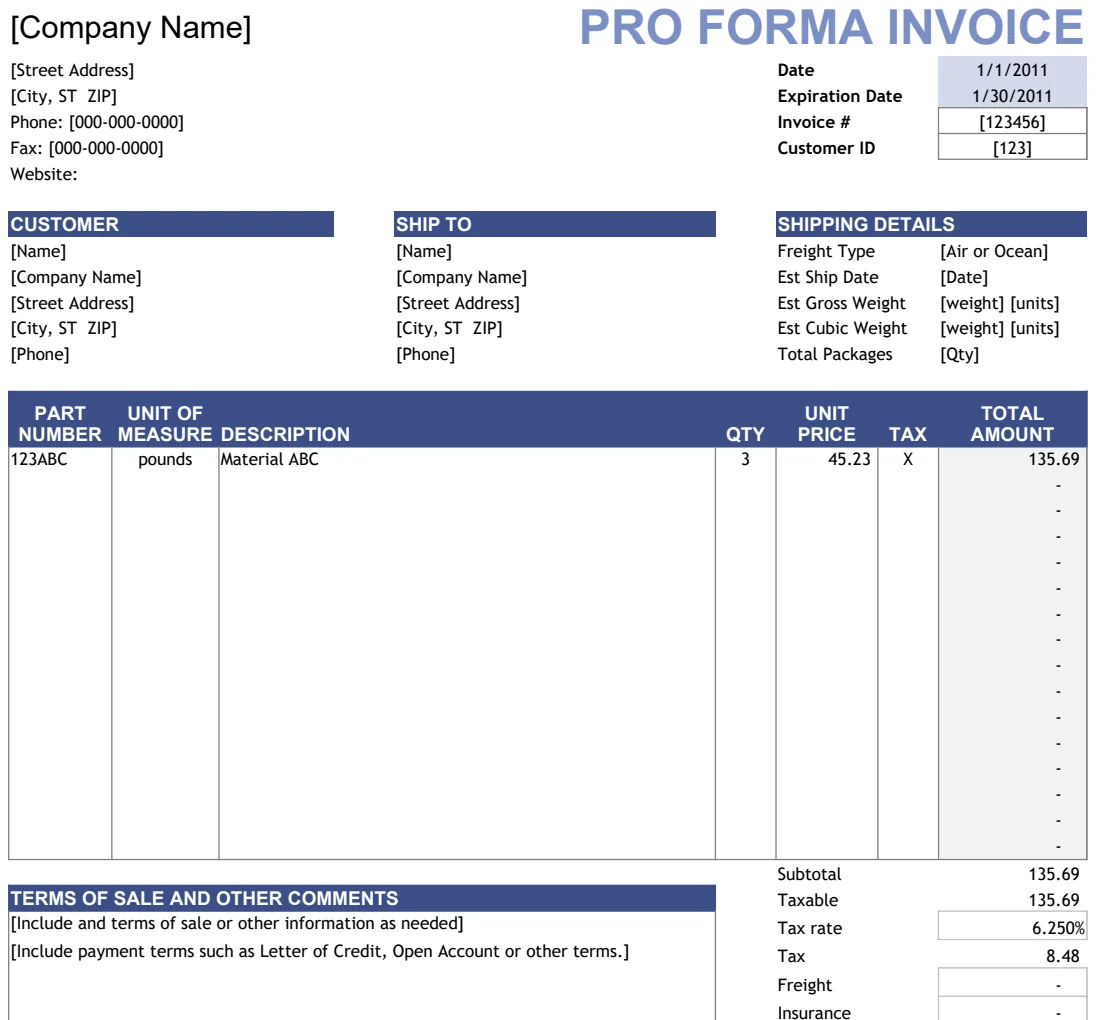
A buyer's bank or import authority may read this document closely, so treat it as carefully as a final invoice. A good proforma invoice format in Excel includes:
- The title "Proforma Invoice", so nobody books it as a real invoice
- Proforma number, date and validity date
- Seller and buyer names and addresses
- Description of the goods, HS code and country of origin
- Quantity, unit price and currency
- Freight, insurance, discount and tax where they apply
- Incoterm and named place, such as CIF Hamburg
- Payment terms, your bank details and the total in words
- Estimated shipment date and port of loading
The validity date matters most for exporters. Prices, freight rates and exchange rates move, so an open-ended quote can bind you to numbers that no longer work.
Commercial invoice format: what customs expects
The commercial invoice repeats the proforma details and adds what happened at shipment:
- A real invoice number and date
- Exporter, importer and, if different, the consignee and notify party
- Vessel or flight, transport document number and ports
- Final quantities actually shipped
- Advance received and balance due
Check the description of goods carefully. A vague line like "spare parts" or "samples" invites questions, because customs needs to know what the item is. Requirements differ by country, and some destinations ask for extra statements or a set number of copies, so confirm with your forwarder or the importer before you ship.
Packing list format: package numbers, weights and CBM
A packing list answers one question: what is in each box? Include:
- Package numbers, for example 1 to 20
- Shipping marks that match what is printed on the cartons
- Description and quantity per package
- Net weight, gross weight and dimensions
- Total packages, total weights and total volume in CBM (cubic metres)
Leave out prices. The people who handle the cargo do not need them, and the invoice already carries that information.
A worked example: one shipment, three documents
A fictional exporter ships 480 ceramic bowls to a buyer in Germany. These figures are examples only.
Goods value
- 480 bowls at $4.50 = $2,160.00
- Incoterm: CIF Hamburg, so the seller pays freight and insurance
- Freight: $320.00
- Insurance: $25.00
- Total: $2,505.00
- Deposit of 30 percent received: $751.50
- Balance due: $1,753.50
Packing
- 24 bowls per carton means 480 / 24 = 20 cartons
- Net weight: 480 × 0.6 kg = 288 kg
- Empty cartons: 20 × 0.8 kg = 16 kg
- Gross weight: 288 + 16 = 304 kg
- Carton size: 50 × 40 × 35 cm is 0.5 × 0.4 × 0.35 = 0.07 CBM per carton
- Total volume: 20 × 0.07 = 1.40 CBM
Choosing the mode
- For air freight, carriers charge on the higher of actual and volumetric weight. A common conversion is 1 CBM = 167 kg, which gives 1.40 × 167 = about 234 kg. The actual 304 kg is higher, so the chargeable weight is 304 kg.
- For LCL sea freight (a shared container), the charge is usually based on the higher of cubic metres or metric tonnes. Here that is 1.40 revenue tonnes, because 1.40 CBM is more than 0.304 tonnes.
Every one of these numbers appears on more than one document. The 20 cartons must match on the invoice, the packing list, the shipping instructions and the transport document. That is why typing them four times is risky.
HS codes: the number customs reads first
The Harmonized System (HS) code classifies your product for customs. The first six digits are shared internationally, and many countries add further digits of their own. The code drives the duty rate and any import rules, so a wrong one can mean the wrong duty or a delay.
Use one code per product line, keep it in your product list and confirm it with your forwarder or customs broker. Do not copy a code from a competitor's listing or a sample template.
Incoterms: who pays for what
An Incoterm tells both sides who pays each cost and where the risk passes from seller to buyer. Incoterms 2020 has 11 rules. Always write the rule with a named place, such as FOB Shanghai.
Common ones:
- EXW: the buyer collects from your premises and handles nearly everything.
- FCA: you deliver to a carrier or place the buyer names. It works for any mode of transport.
- FOB: for sea and inland waterway only. Risk passes once the goods are on board the vessel, and the buyer pays the main freight.
- CIF: also sea only. You pay freight and insurance to the destination port, yet the risk passes at the origin port once the goods are on board.
- DAP: you deliver to the named destination, and the buyer handles import clearance and duty.
- DDP: you deliver with duty paid, which puts import clearance on you.
A classic mistake is writing FOB on an air shipment. Four rules (FAS, FOB, CFR and CIF) are for sea and inland waterway only, so an air order should use a rule such as FCA, CPT or CIP. The freight line on your invoice should also match: under CIF you charge it, while under FOB the buyer normally pays it.
Mistakes that hold up export shipments
- Mismatched totals. Cartons, weights or values that differ between documents are the most common cause of queries.
- Goods descriptions that change. Use the same wording on every document. Banks checking a letter of credit look at this closely.
- Missing or guessed HS codes. Confirm them before the first shipment, not at the port.
- An Incoterm with no named place. "CIF" alone does not say where.
- An Incoterm that does not suit the transport mode.
- Old exchange rates. Set the rate on each shipment and record it.
- Forgetting the proforma validity date. Your quote can outlive your costs.
How to check export documents before you send them
Run through this list before anything leaves your office:
- 01Package count, net weight, gross weight and CBM match on every document.
- 02Every line has a description, HS code and country of origin.
- 03Consignee and notify party match the buyer's instructions.
- 04The Incoterm has a named place and suits the transport mode.
- 05Freight and insurance fit the Incoterm.
- 06Invoice number, date and bank details are filled in.
- 07If there is a letter of credit, every document follows its wording exactly.
A linked Excel template for export documents
The safest fix for mismatched paperwork is to enter the shipment once. The Export Documents Pack is an Excel workbook that does this. Pick a shipment number on the Document Centre, and the proforma invoice, commercial invoice, packing list and shipping instructions all rebuild from the same data.
Products hold your HS codes, country of origin, prices, weights and package sizes. Customers hold the buyer, consignee, notify party, currency and terms. Add the quantities to a shipment and package numbers, net weight, gross weight and CBM follow automatically. Both invoices show the amount in words, and each document prints on one A4 page.
The Document Centre runs 16 checks on the selected shipment and says what to fix, including missing HS codes, an Incoterm that does not suit the transport mode and freight that does not match the rule. It also includes an Incoterms 2020 guide, a load planner for containers, air chargeable weight and LCL, multi-currency pricing and a dashboard with open balances. It covers 200 shipments, contains no macros and uses an editable tax rate, so it can show GST, VAT or no tax. HS codes, rates and bank details in the sample are placeholders to replace with your own.
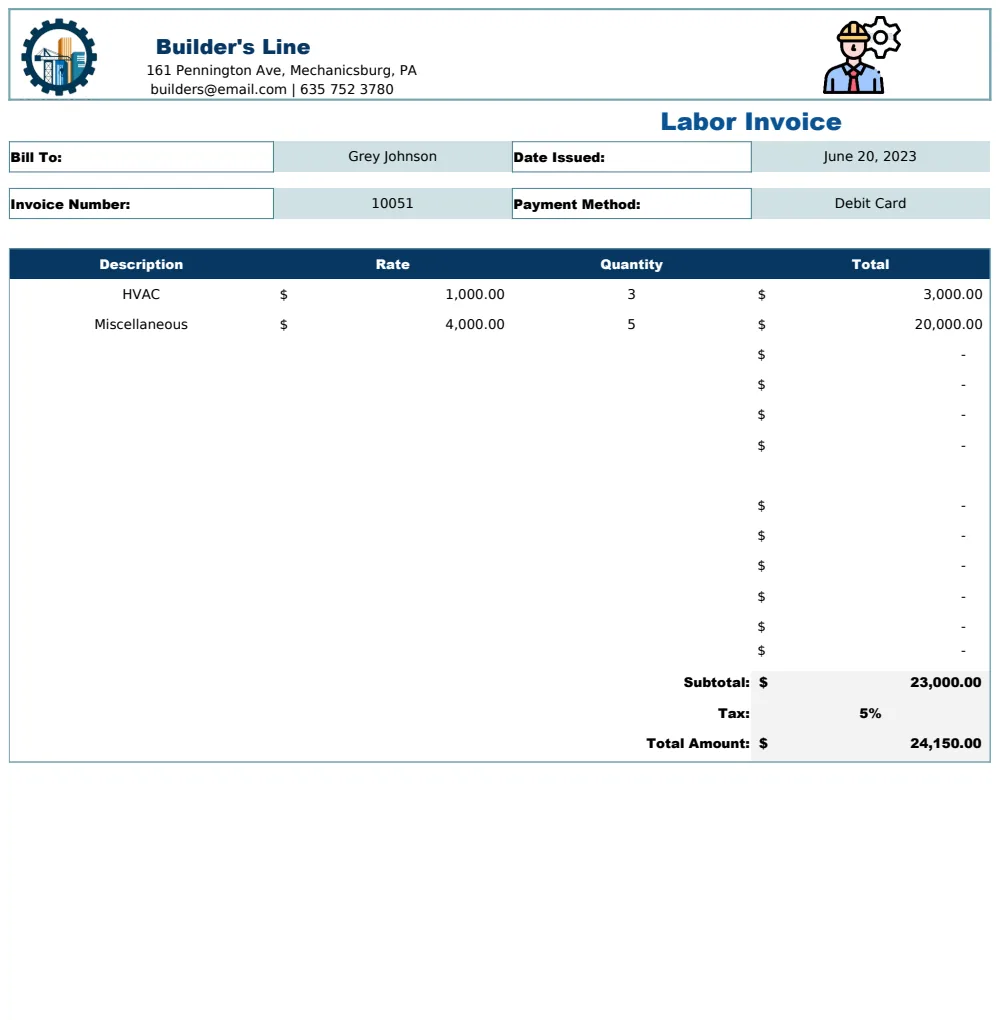
If you only need one document, these simpler templates may be enough:
Common questions
What is the difference between a proforma invoice and a commercial invoice?
A proforma invoice is a quotation issued before the sale, which a buyer can use to arrange payment or an import permit. A commercial invoice is the bill of sale issued at shipment, and customs uses it to value the goods.
Is a proforma invoice legally binding?
It is an offer rather than a demand for payment, and it is not booked as a sale. Once the buyer accepts it, the terms can form part of the agreement, depending on the contract and local law. Give it a validity date and keep your terms clear.
What should a packing list include?
Package numbers, shipping marks, descriptions, quantities, net and gross weight, dimensions and total volume. It does not show prices.
Can I use a proforma invoice for customs?
Customs normally expects a commercial invoice for a sale. Some shipments, such as free samples, may follow different rules, so check with your forwarder or the destination's customs authority.
How do I calculate CBM for a shipment?
Multiply length × width × height of one carton in metres, then multiply by the number of cartons. A 50 × 40 × 35 cm carton is 0.07 CBM, so 20 cartons are 1.40 CBM.
Does the template work with GST or VAT?
Yes. Sales tax is an editable percentage on each shipment and the label is set on the Settings tab, so it can show GST, VAT or no tax. Check the rules that apply to your exports, because many countries treat exports differently from domestic sales.
Clean export paperwork saves days at the port and keeps buyers confident. You can preview the Export Documents Pack free; downloading it is included in the OpenWorksheet monthly plan, along with the rest of the library. This guide is general information, so confirm customs and tax requirements for your own goods and destination with your forwarder or customs broker.